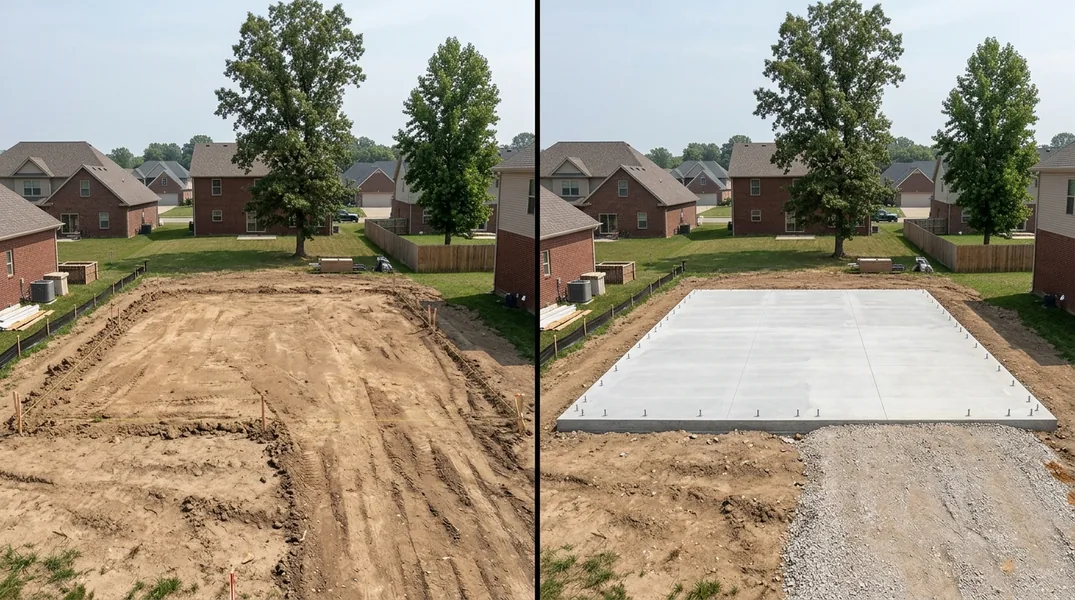
Why New Construction Slab Inspection Matters for Evansville Homebuyers
Buying a new home is one of the largest investments you'll make, and the foundation quite literally supports everything else. When it comes to new construction, the concrete slab beneath your garage, driveway, and home foundation deserves serious attention before you sign the final papers. Many homebuyers focus on interior finishes and appliances while overlooking the structural integrity of the concrete work, which can lead to expensive problems down the road.
A concrete slab that isn't properly installed, finished, or cured can develop cracks, settle unevenly, or fail to drain water correctly. These issues don't just affect appearance. They can compromise your home's structural stability, invite moisture into your basement or crawlspace, and create liability concerns if someone slips on an improperly finished surface. In Evansville, where weather patterns include freeze-thaw cycles and seasonal moisture changes, a poorly executed slab becomes a ticking time bomb. Taking the time to understand what makes a quality new construction concrete slab is one of the smartest decisions you can make before closing.
What to Look for During a New Home Garage Slab Inspection
The garage slab is often the most visible concrete surface in a new home, and it's also one of the most heavily used. Start by walking the entire garage floor and looking for visible cracks, particularly any that are wider than a hairline or that run in patterns. Some minor cracking is normal as concrete cures, but deep cracks, spalling (surface deterioration), or chunks missing from the edges are red flags. Check whether the slab is level by observing how water would drain. If you notice standing water or areas where liquid pools, that indicates poor slope and drainage, which will cause problems during heavy rain or spring thaw.
Run your hand across the surface to assess the finish quality. A properly finished garage slab should feel relatively smooth without excessive roughness or soft spots. Soft or powdery areas suggest the concrete wasn't cured correctly or that the surface is already deteriorating. Look at the edges where the slab meets the walls. There should be no gaps, and the concrete should be firmly attached. Check for evidence of settling, which might appear as a slight dip or depression in the middle of the slab. Finally, examine the perimeter for any signs of water intrusion, staining, or efflorescence (a white, chalky residue that indicates moisture movement through the concrete). If you have concerns about what you're seeing, it's worth calling in a professional before closing.
Understanding Concrete Slab Grading, Slope, and Drainage
Proper grading and slope are critical for any concrete slab, whether it's a garage floor, driveway, or foundation. The slab should be graded to direct water away from your home's foundation and any structure. This is especially important in Indiana, where spring runoff and heavy summer storms are common. A slab that slopes toward your home instead of away from it will funnel water directly into your basement or crawlspace, leading to moisture damage, mold, and structural problems that are expensive to repair.
During your inspection, take a close look at how the garage slab connects to the foundation wall. There should be a clear slope away from the house. If the slab is flat or slopes inward, this is a major defect that should be documented and addressed before you take possession. Additionally, check whether there are adequate drainage provisions around the perimeter. Some builders install a perimeter drain system or a sump pump to manage water, while others rely on proper grading alone. Ask your builder about the drainage design and request documentation. If the slab appears to have drainage issues and the builder refuses to correct them, you may want to consult with a structural engineer before proceeding with your purchase.
Builder Slab Inspection in Indiana: What Standards Apply
Indiana doesn't have a single statewide concrete slab standard that all builders must follow, but the International Building Code (IBC) and the Indiana Building Code serve as the baseline for most new construction. Most builders in the Evansville area follow these codes, though compliance can vary. Before closing, request documentation from your builder showing that the concrete work was inspected and approved by the local building department. This paperwork should include the concrete mix design, finishing specifications, and any third-party inspection reports.
Ask your builder specific questions about the concrete mix, the curing time allowed, and the finishing methods used. High-quality concrete for slabs typically includes proper air entrainment (tiny air bubbles that help the concrete withstand freeze-thaw cycles common in Indiana winters), adequate strength ratings, and appropriate water-to-cement ratios. If the builder can't provide clear answers or documentation, that's a warning sign. You can also reach out to the local building department to confirm that the concrete work passed inspection. If you're uncertain about what you're seeing or if the builder seems evasive, consider hiring an independent concrete professional to conduct a pre-closing inspection. The investment in a professional assessment now can save you thousands in repairs later.
Common Concrete Slab Defects and What They Cost to Fix
Understanding the potential costs of common concrete defects helps you weigh whether to negotiate repairs before closing or walk away from the deal. Hairline cracks are typically cosmetic and don't require repair, but wider cracks that continue to grow or that allow water infiltration may need professional attention. Minor crack repair can cost a few hundred dollars, while structural cracks that require slab replacement can run into the thousands. Uneven settling or a slab that's sinking in one corner might require mudjacking or slab replacement, which is among the most expensive repairs, often costing $3,000 to $10,000 or more depending on the size and severity.
Drainage problems, while sometimes fixable with exterior grading or the addition of a sump pump system, can lead to foundation damage and basement moisture issues that are far more costly to address. Poor surface finishes that are too rough or too slippery may require Concrete Repair & Resurfacing to restore functionality and safety. Efflorescence and water staining, while often cosmetic, can indicate deeper moisture problems. If you discover defects during your pre-closing inspection, document everything with photos and written notes, then present this information to the builder. Many builders will agree to make repairs before closing rather than face a lawsuit later. If they refuse and the issues are significant, you have the right to renegotiate the purchase price or walk away.
Getting Professional Help Before Closing: When to Call an Expert Near Me
If you're not confident in your ability to evaluate the concrete slab yourself, or if you've noticed anything that concerns you, don't hesitate to bring in a professional. A pre-closing concrete inspection by a qualified contractor can identify problems that an untrained eye might miss. Evansville Concrete Pros has years of experience evaluating new construction concrete work and can provide you with a detailed report of any defects, along with honest recommendations about what needs to be fixed and what's acceptable wear and tear.
Getting a free estimate or professional inspection typically costs a few hundred dollars, but it's money well spent when you're about to close on a six-figure home purchase. A professional can also advise you on whether defects are cosmetic or structural, which helps you decide whether to push back with the builder or accept the slab as-is. If you're in Evansville or the surrounding areas and you'd like expert guidance on your new construction concrete, reach out to Evansville Concrete Pros at (930) 212-4874. We're here to help you make an informed decision before you sign on the dotted line.
Looking for a professional concrete contractor in Evansville? Evansville Concrete Pros responds fast for all your concrete needs.
Get a Free QuoteOur services: Concrete Driveways · Concrete Patios · Stamped & Decorative Concrete