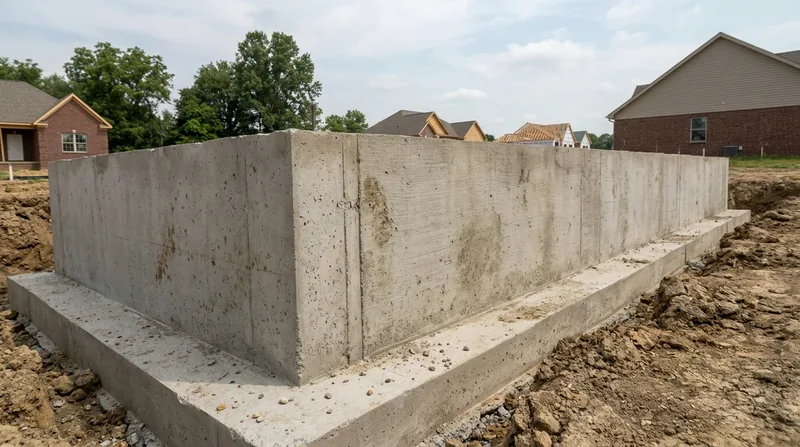




Concrete Slabs & Foundations in Evansville are the backbone of every structure, from new garage construction to room additions and shed footings. Evansville's terrain presents unique challenges: the wind-blown loess silt on the uplands, soft river-bottom alluvium near the Ohio River, and pockets of wet slack-water clay all demand engineered slabs with proper base preparation and steel reinforcement. Freeze-thaw cycles and seasonal moisture swings test foundations year-round, especially in older neighborhoods like Riverside and Haynie's Corner where Victorian and Italianate homes sit on aging limestone footings, and in post-war subdivisions where 1950s and 1960s concrete has seen decades of salt exposure and settling. A properly built slab today prevents costly repairs, settlement, and moisture problems tomorrow. We design and pour concrete slabs and footings that hold up to Evansville's climate and soil conditions for decades.
Why Concrete Slabs & Foundations Matter in Evansville's Variable Climate
Evansville sits on the edge of the Ohio River floodplain, where the ground shifts between drying loess and saturated clay with every season. Winter brings freeze-thaw cycles that crack poorly constructed slabs, road salt that scales concrete surfaces, and ice that stresses inadequate footings. Spring thunderstorms and occasional flooding test drainage and base stability. Summer heat and humidity accelerate concrete deterioration if sealing and reinforcement are not done right from the start. A slab built with proper compaction, thickness, and steel rebar resists these stresses for 30, 40, or even 50 years. A weak foundation or shallow footing fails in half that time.
- We compact the base to eliminate settling and tilting caused by wet clay and alluvium beneath Evansville's older and newer neighborhoods.
- We specify steel reinforcement (rebar or wire mesh) matched to soil type and load, so garages, sheds, and room additions stay level and crack-free.
- We engineer thickness for local frost depth (36 inches in Evansville) so footings sit below the frost line and resist heave.
- We finish with proper slope and sealing to shed water away from the structure and prevent moisture intrusion.
These details are the difference between a slab that lasts and one that fails within a decade.
Local reality: Evansville's clay-rich soils and seasonal moisture swings cause more slab settlement and tilting than any other single factor. Older homes in Riverside and Jacobsville often show sloping porches and cracked basement walls because early foundations were not engineered for clay movement. We design every new slab to prevent that.
For more on foundation and soil challenges, see the USGS guide to expansive and problematic soils, which covers clay behavior in the Midwest.
How We Build Concrete Slabs & Foundations That Hold Up in Evansville
Every concrete slab starts below grade. We remove topsoil and soft material, then compact the subgrade in lifts to eliminate future settling. We install a base layer (typically 4 to 6 inches of gravel or recycled asphalt) and compact it to 95% standard density. We then place steel reinforcement (rebar grid or welded wire fabric) at mid-depth, set forms to grade, and pour concrete mixed and finished to specification. The result is a solid, level foundation that resists Evansville's freeze-thaw cycles, moisture swings, and soil movement.
- We excavate to frost depth (36 inches minimum in Evansville) and compact the subgrade in 6-inch lifts to 95% density.
- We install a 4 to 6 inch base layer and compact it to prevent settling and moisture wicking.
- We place steel reinforcement at mid-slab depth to bridge clay and prevent cracking from soil movement.
- We set forms square and level, pour concrete to the specified thickness and strength (typically 4 inches for slabs, 12 to 16 inches for footings), and finish with proper slope for drainage.
- We cure the concrete properly (keeping it moist for 7 days) so it reaches full strength before loading.
This sequence is standard in professional concrete work and is essential in Evansville's challenging soil and climate.
Example: A homeowner in Newburgh wanted a garage slab on a lot with wet clay and a history of settling. We excavated 36 inches, compacted the subgrade in lifts, installed 6 inches of compacted gravel, placed a rebar grid at mid-depth, poured 5 inches of 4,000 PSI concrete, and finished with a 2% slope for drainage. Five years later, the slab is level, crack-free, and dry underneath. Without proper base and reinforcement, it would have cracked and settled within 18 months.
See our Concrete Repair & Resurfacing service page for how we fix slabs damaged by inadequate base or settlement.
Methods and Slab Types
| Approach | Description | Best for |
|---|---|---|
| Grade Beams & Footings | Concrete poured below frost line (36 inches in Evansville) with steel reinforcement, supporting walls and posts. | New construction, additions, and structures in areas with clay or wet soil. |
| Thickened Edge Slabs | 4 to 5 inch slab with a 12 to 16 inch deep perimeter footing, poured as one unit, rebar throughout. | Garage slabs, shed pads, and room additions where the slab bears both interior and perimeter loads. |
| Monolithic Slabs | Footing and slab poured in one lift, no cold joint, full reinforcement, typically 4 inches thick with 12 inch deep perimeter. | Residential garages and small structures where speed and simplicity are priorities and soil is stable. |
| Post-Tensioned Slabs | High-strength cables tensioned after concrete cures, creating a rigid, crack-resistant slab for challenging soil. | Expansive clay areas, large structures, and situations where settling or heave is a known risk. |
Concrete Slabs & Foundations Cost in Evansville: What to Expect
Concrete slab pricing in Evansville typically starts at $5 to $7 per square foot for a straightforward garage or shed pad with standard base preparation and 4-inch poured concrete. A 20 by 24 foot garage slab (480 sq ft) runs roughly $2,400 to $3,360 before finishing or sealing. Cost moves up if the soil is poor (requiring deeper excavation or base stabilization), if access is limited (restricting equipment), if reinforcement is complex, or if the slab is thicker or deeper than standard. A footing-only job or a post-tensioned slab costs more per square foot because of the engineering and material. Travel to Newburgh, Boonville, Mount Vernon, or other nearby areas is included in our pricing, with no separate mileage charge. We recommend getting two or three estimates so you can compare scope, materials, and timeline. A free, no-obligation estimate takes about 24 hours to deliver, and we'll walk you through what affects your final cost.
Concrete Slabs & Foundations Near Me: What to Look for When Hiring a Contractor in Evansville
Hiring the right concrete contractor means checking three things: insurance, references, and a clear understanding of the work and permits. A reputable contractor carries general liability insurance and workers compensation coverage, and will provide a certificate of insurance on request. Ask for references from recent slab jobs in Evansville or nearby, and call or visit those sites if you can. Understand whether your project needs a local permit (most garage and foundation work in Evansville does) and whether the contractor will handle permit paperwork or leave it to you. If your property is in an HOA (common in newer subdivisions like McCutchanville and Darmstadt), check HOA requirements before work begins. Get the estimate in writing, including materials, labor, timeline, and cleanup. If you have questions, call Evansville Concrete Pros at (930) 212-4874 for a free consultation.
Insurance matters: Always verify that your contractor carries general liability and workers compensation. Ask to see the certificate of insurance before work starts. If someone is injured on your property and the contractor is uninsured, you could be liable.


