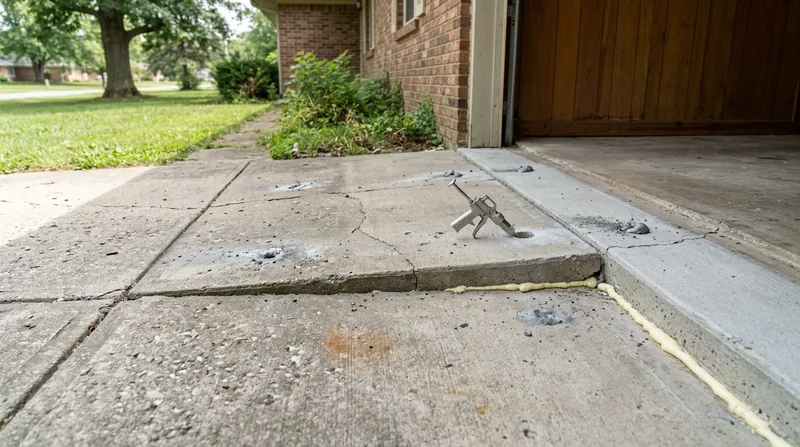




Concrete leveling and slab lifting in Evansville is the fast, cost-effective answer to sunken driveways, settled patios, and uneven walkways that plague older neighborhoods and new subdivisions alike. Evansville sits on wind-blown loess silt and soft river-bottom alluvium that shifts with freeze-thaw cycles, moisture swings, and the weight of decades. The Riverside historic district, Jacobsville, and post-war eastside subdivisions all show the same pattern: concrete slabs that tilt, crack, and create trip hazards as the ground beneath them settles unevenly. Instead of jackhammering out the old slab and pouring new concrete, we lift and level the existing surface in hours, restore safe walking and driving surfaces, and do it for a fraction of full replacement cost. This page walks you through why this matters in Evansville, how the work gets done, what you should expect to pay, and how to find a contractor you can trust.
Why Concrete Leveling Matters in Evansville's Shifting Ground
Evansville's foundation challenges are rooted in geology and climate. The city's terrain ranges from wind-blown upland silt to soft river-bottom clay that holds water and swells in wet springs, then shrinks and settles in dry summers. Freeze-thaw cycling from November through March, combined with road de-icing salt and heavy spring thunderstorms, accelerates concrete failure. Older brick foursquares and Craftsman bungalows on the west side, Victorian row homes in Riverside, and 1950s-70s ranch homes across the north and east side all sit on slabs that have moved. New subdivisions toward McCutchanville and Newburgh show the same problem within 5 to 10 years as soils compact and shift.
- Uneven concrete creates trip hazards that pose liability and injury risk for homeowners, guests, and contractors.
- Settled slabs around driveways and patios allow water to pond, accelerating freeze damage and structural decay.
- Lifted or tilted concrete near foundations can indicate deeper soil movement that affects the house itself.
- Delaying repair allows cracks to widen and spreads the settled area, making the final fix more costly.
Addressing sunken concrete early stops the problem from spreading and keeps your property safe and usable.
Key insight: Evansville's freeze-thaw cycles and clay-rich soils cause more settlement problems than any other single factor. A driveway that looks level in summer may tilt 2 to 3 inches by spring, creating standing water and cracking that worsens each winter.
For more information on how to address cracked or damaged concrete, see our guide to concrete repair and resurfacing in Evansville.
How Concrete Leveling and Slab Lifting Works in Evansville
Concrete leveling uses hydraulic jacking and controlled grouting to raise settled slabs back to grade without removing them. Our crew begins with a site inspection to identify settlement patterns, soil conditions, and the structural cause of the tilt. We then drill small ports through the concrete, inject a controlled mixture of polyurethane foam or limestone grout beneath the slab, and monitor lift in real time. The process is fast, produces minimal mess, and leaves the concrete surface ready for use within hours. Unlike full replacement, leveling preserves existing decorative finishes, colored concrete, or stamped surfaces and avoids weeks of downtime.
- We assess the settled slab with laser levels and visual inspection to map the high and low points accurately.
- We drill small lifting ports (typically 1 to 2 inches in diameter) at strategic points beneath the slab.
- We inject expanding polyurethane foam or limestone grout through the ports to raise the slab incrementally.
- We monitor lift pressure and height continuously to prevent over-correction and damage to the slab edges.
- We seal all lifting ports with concrete grout to restore the surface and prevent water intrusion.
The entire process typically takes 4 to 8 hours for a standard driveway or patio, depending on size and the number of settlement zones.
Example: A 1950s ranch home driveway in Evansville's north side settled 3 inches at the garage entrance, creating a trip hazard and trapping water. We lifted it back to grade in one day using polyurethane foam injection, and the homeowner avoided a $6,000 full replacement.
If your driveway or patio needs more than leveling, learn about our full range of concrete driveway services.
Concrete Leveling Methods: Polyurethane Foam vs. Limestone Grout
| Approach | Description | Best for |
|---|---|---|
| Polyurethane Foam Injection | Lightweight, expanding foam is injected beneath the slab and cures to a rigid state, lifting the concrete gradually and evenly without adding excess weight to the soil. | Residential driveways, patios, and walkways where soil is already saturated or compressible; minimal additional load desired. |
| Limestone Grout Injection | Slurry of limestone, water, and additives is pumped beneath the slab to fill voids and compact loose soil, providing long-term stability and supporting heavier loads. | Driveways with commercial vehicle traffic, patios under heavy furniture or pools, and areas with soft clay that benefit from additional soil consolidation. |
| Combination (Foam + Grout) | Polyurethane foam lifts the slab quickly, then limestone grout is injected to fill remaining voids and lock in the repair for maximum durability. | Large or complex slabs, multiple settlement zones, and situations where both lift speed and long-term stability are critical. |
| Mud Jacking (Traditional Grouting) | Heavier slurry of soil, water, and Portland cement is pumped beneath the slab to fill voids and raise the surface, leaving a denser repair base. | Older concrete, heavily trafficked areas, and cases where maximum weight and compaction are needed for long-term support. |
Concrete Leveling and Slab Lifting Cost in Evansville: What to Expect
Concrete leveling typically costs starting at $4 per square foot, but the final price depends on slab size, the number of settlement zones, soil conditions, and the injection method you choose. A 500-square-foot driveway with one settled area might run $2,000 to $2,500 using polyurethane foam. A larger patio with multiple zones or a driveway on soft clay may cost $3,000 to $5,000 or more. Getting 2 to 3 estimates from insured contractors helps you understand the scope and avoid surprises. Each contractor should inspect the site in person and explain why they recommend a specific method.
- Slab size is the primary cost driver; larger driveways and patios require more injection material and labor.
- Settlement pattern matters: a single low spot costs less than multiple zones requiring separate lift points.
- Soil type affects material choice and cost; clay and saturated soil often favor polyurethane foam over heavier grout.
- Access and obstacles like vehicles, landscaping, or tight spaces can increase labor time and cost.
- Regional travel is included within Evansville and surrounding areas; no separate mileage fee applies.
For a detailed breakdown of pricing across all our concrete services, visit our full pricing page.
Concrete Leveling and Slab Lifting Near Me: What Evansville Homeowners Should Know When Hiring a Contractor
Hiring the right contractor for concrete leveling starts with verifying insurance and workers' compensation coverage. Every reputable contractor in Evansville carries general liability insurance to cover property damage and workers' compensation to protect their crew. Ask for a certificate of insurance before work begins, and confirm that coverage is active for the dates of your job. Check references by calling past clients and asking about the quality of the lift, the cleanliness of the work site, and whether the repair has held over time. Get multiple estimates in writing so you can compare methods, materials, and pricing side by side. If your property is in an HOA community or near a historic district like Riverside, confirm that the contractor understands local permitting requirements and can obtain any necessary approvals before starting work.
- Verify general liability and workers' compensation insurance with a current certificate before signing any contract.
- Call at least two past clients and ask how long their repair has lasted and whether they would hire the contractor again.
- Request written estimates that specify the lifting method, material, slab size, and warranty terms in detail.
- Confirm that the contractor can handle permits and HOA notifications if your property requires them.
- Ask about the warranty on the repair and what happens if the slab settles again within the guarantee period.
Ready to get started? Contact Evansville Concrete Pros for a free, no-obligation estimate at (930) 212-4874, and we'll inspect your slab and recommend the best lifting method for your soil and budget.
Concrete Leveling & Slab Lifting in Evansville: Pricing Guide
| Service | Price | Details |
|---|---|---|
| Polyurethane Foam Lifting | Starting at $4/sq ft | Lightweight foam injection for residential driveways and patios; cost increases with multiple settlement zones or difficult soil access |
| Limestone Grout Injection | Starting at $5/sq ft | Heavier grout for commercial traffic or clay soils; provides long-term consolidation and higher load-bearing capacity than foam alone |
| Combination (Foam + Grout Repair) | Starting at $6/sq ft | Polyurethane foam lift followed by limestone grout fill; best for large slabs, multiple settlement zones, or maximum durability |
| Site Assessment and Laser Leveling | Included | Free on-site inspection with laser level mapping to identify settlement patterns and recommend the appropriate lifting method |
| Travel and Mobilization | Included | No separate charge for service calls within Evansville and surrounding areas; pricing reflects local market and soil conditions |
| Free Estimate | No obligation | Written quote within 24 hours; call (930) 212-4874 to schedule your inspection and receive a firm price for your slab |
Indicative pricing, the exact cost depends on square footage, finish, and site access. Free personalized estimate within 24h at (930) 212-4874.


