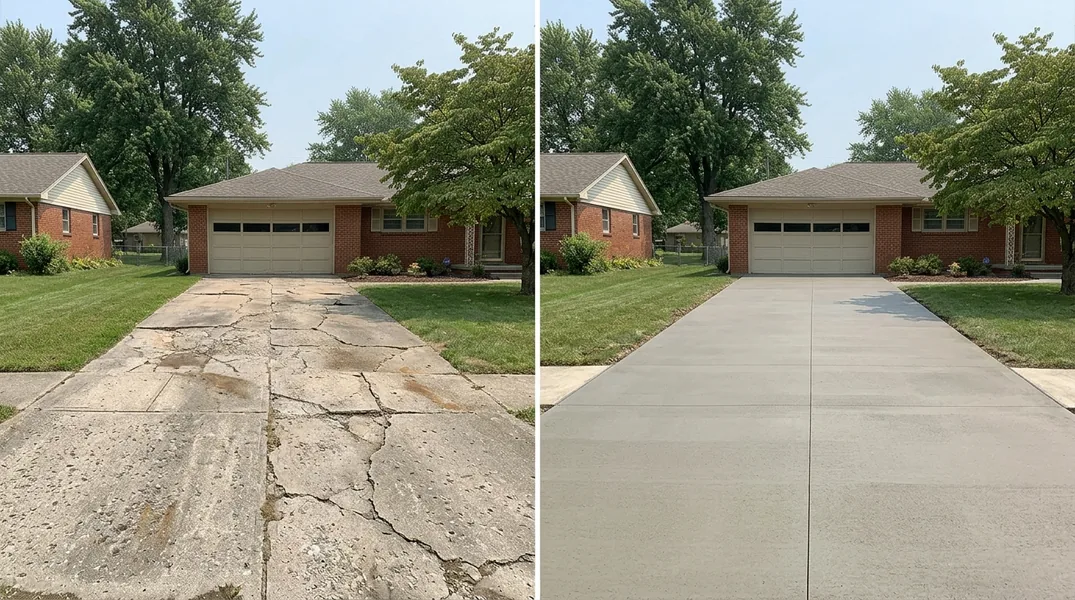
Why Timing Matters for Concrete Pouring in Evansville
If you're planning a Concrete Driveways project in Evansville, you might think that concrete can be poured anytime during the year. The reality is far more nuanced. The timing of your concrete pour directly impacts the quality, durability, and longevity of your finished project. Indiana's variable climate means that temperature, humidity, and moisture levels all play critical roles in how well your concrete cures and performs over time.
Concrete is a chemical compound that requires specific conditions to cure properly. When you pour concrete, it begins a hydration process that transforms it from a workable liquid into a solid surface. This process doesn't happen instantly, and rushing it or exposing it to unfavorable conditions can result in cracking, scaling, discoloration, and premature deterioration. Understanding the best season to pour concrete in Evansville will help you avoid costly mistakes and ensure your investment lasts for decades.
Spring: The Ideal Season for Concrete Pouring
Spring is widely considered the best time to pour concrete throughout Indiana, and Evansville is no exception. As temperatures begin to rise and winter's grip releases, conditions become nearly perfect for concrete curing. Typical spring temperatures in the 50s to 70s Fahrenheit range provide an ideal window for the concrete hydration process. The moderate warmth accelerates curing without the extreme heat that can cause rapid evaporation and surface cracking. Moisture levels are generally balanced during spring months, which is essential because concrete needs adequate moisture to cure properly.
Beyond temperature, spring offers another significant advantage: lower humidity fluctuations compared to summer and fall. Consistent humidity helps concrete cure evenly, reducing the risk of differential curing that can lead to warping or cracking. If you're considering a Concrete Patios or other decorative concrete project, spring is particularly favorable because it allows you to see the true color and finish of your work without the interference of extreme weather conditions. Many homeowners and contractors in the region schedule their concrete work between April and May to take full advantage of these optimal conditions.
Cold Weather Concrete Curing: Winter Challenges in Indiana
Winter presents the most challenging environment for concrete work in Indiana. When temperatures drop below 50 degrees Fahrenheit, the concrete hydration process slows dramatically. Below 40 degrees, curing essentially stalls, meaning your concrete may not reach adequate strength for weeks or even months. This extended curing time creates several problems. Freeze-thaw cycles, common in Evansville winters, are particularly destructive. When water trapped in fresh concrete freezes, it expands, creating internal pressure that causes cracking and spalling. Once your concrete has cured and hardened, freeze-thaw cycles still pose a threat, which is why proper Concrete Repair & Resurfacing becomes necessary for winter-damaged surfaces.
If you absolutely must pour concrete during winter months, special measures become necessary. Contractors may use heated enclosures, insulating blankets, or additives to accelerate curing and protect the concrete from freezing temperatures. These protective measures significantly increase project costs and complexity. Additionally, winter precipitation can contaminate fresh concrete, and icy conditions make the work site hazardous for crews. Unless you have an urgent deadline, scheduling your concrete project for warmer months will save you money and headaches while producing superior results.
Summer Heat and Humidity: Concrete Curing in Hot Weather
Summer brings its own set of challenges for concrete work. While warm temperatures accelerate the hydration process, excessive heat can actually compromise concrete quality. High temperatures cause concrete to cure too quickly on the surface while the interior remains soft, creating a weak outer shell prone to cracking. Summer humidity in Indiana can be quite high, and combined with intense sun exposure, this creates uneven curing conditions. The top surface of your concrete dries and cures faster than the subsurface, leading to differential stress and the formation of surface cracks. This is particularly problematic for Stamped & Decorative Concrete projects where surface integrity directly affects aesthetics and functionality.
If you're planning a summer concrete project, proper curing techniques become critical. Contractors must actively manage moisture by misting the concrete surface and covering it with plastic sheeting or wet burlap to slow evaporation. Timing the pour early in the morning or late in the afternoon can help avoid the peak heat hours. Additionally, summer storms can present challenges, as heavy rain on fresh concrete can damage the surface and disrupt the curing process. While summer concrete work is possible with proper precautions, many professionals recommend late summer (August into early September) as a compromise between spring and peak summer conditions.
Fall: A Secondary Window for Concrete Projects
Fall offers a secondary window for concrete pouring in Indiana, though it's not quite as ideal as spring. September and early October typically feature pleasant temperatures and lower humidity levels than summer, making conditions favorable for concrete curing. As fall progresses, however, temperatures drop, and the risk of frost damage increases. Late fall concrete work requires careful planning because you need enough warm days remaining for the concrete to achieve adequate strength before winter arrives. A general rule is that concrete needs at least seven to ten days of temperatures above 50 degrees Fahrenheit after pouring to develop sufficient strength to withstand freeze-thaw cycles.
The advantage of fall work is that it allows you to complete projects before winter weather sets in, and you'll benefit from lower humidity than summer months. However, the narrow window and unpredictable weather patterns make fall less reliable than spring. If you're considering a fall concrete project, it's essential to work with experienced contractors who understand Indiana's climate patterns and can accurately assess whether conditions will remain favorable long enough for proper curing. Contacting Evansville Concrete Pros at (930) 212-4874 for a free estimate will help you determine if your project timeline is realistic for fall scheduling.
Planning Your Concrete Project: What Homeowners Should Know
Choosing the right time to pour concrete isn't just about picking a season, it's about understanding your specific project needs and local weather patterns. Different types of concrete work may have slightly different optimal windows. For example, Concrete Driveways that will experience heavy vehicle traffic need to cure to full strength before use, making spring the safest choice. Decorative projects may benefit from the visual clarity that spring and fall provide. Repair work might be scheduled around weather windows when existing damage can be properly prepared and new concrete can cure undisturbed.
The best approach is to plan your concrete project well in advance and target the spring season (April through May) for optimal results. If spring isn't possible, fall (September through early October) offers a reasonable alternative. Avoid scheduling concrete work during the depths of winter or peak summer heat unless absolutely necessary. When you're ready to move forward with your project, the team at Evansville Concrete Pros can provide expert guidance on timing, weather considerations, and pricing for your specific needs. Contact us today at (930) 212-4874 or visit our website to discuss your concrete project and get started on the right timeline for success.
Looking for a professional concrete contractor in Evansville? Evansville Concrete Pros responds fast for all your concrete needs.
Get a Free QuoteOur services: Concrete Driveways · Concrete Patios · Stamped & Decorative Concrete